Kitchen cupboard layouts are among the most permanent decisions in a renovation. Unlike flooring or paint, they're structurally integrated, expensive to alter, and lived with daily. A layout that works in the showroom — or looks right on a floor plan — can reveal its problems only after move-in, when the traffic patterns and daily habits of an actual household expose every friction point.
This is a guide to the thinking that produces modern kitchen cupboard layouts that function as well in five years as they do on day one.

The Four Primary Configurations — and What Each One Demands
Most kitchens reduce to one of four layout types. Each has a different relationship to cupboard placement, and treating them interchangeably is where many planning errors begin.
Galley
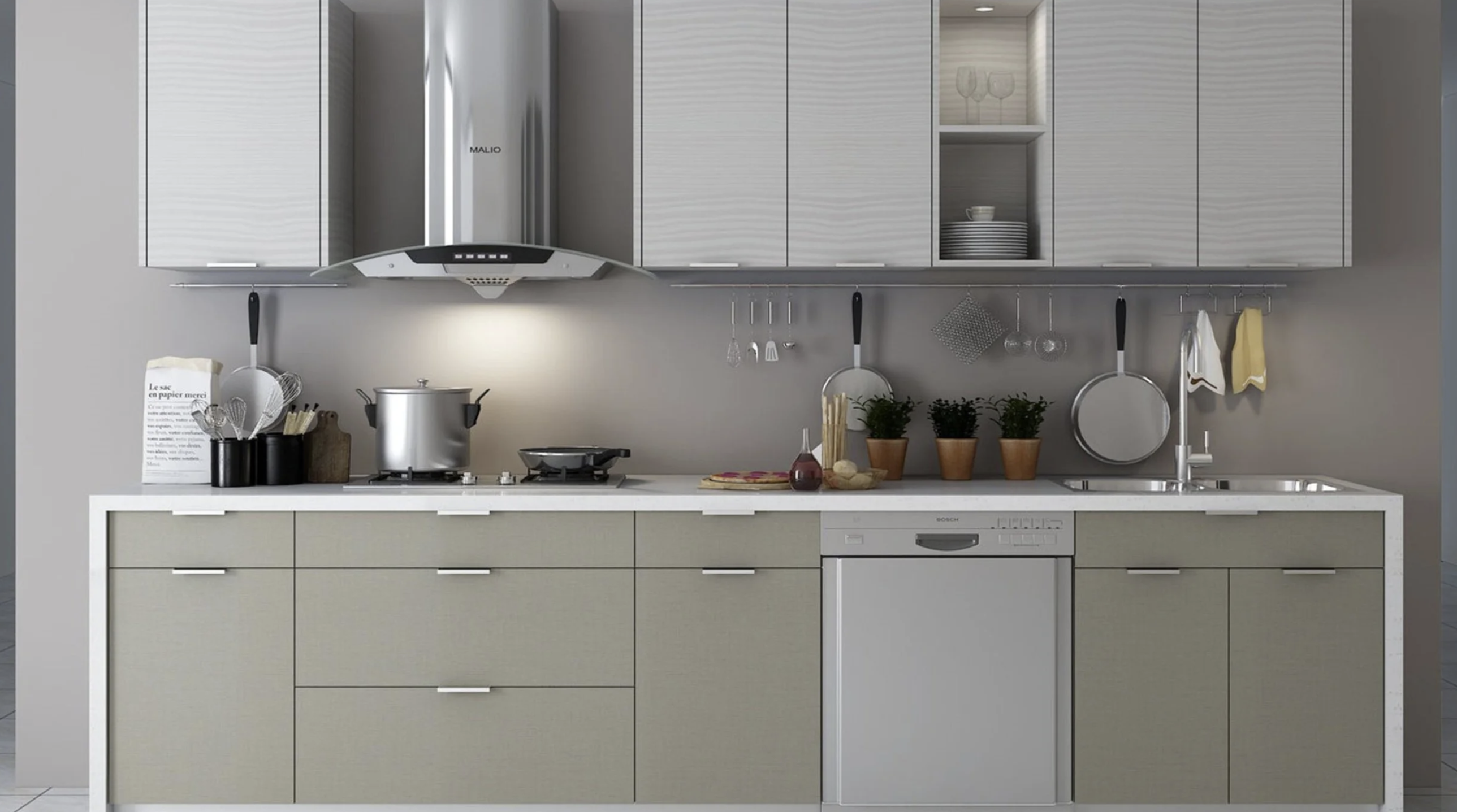
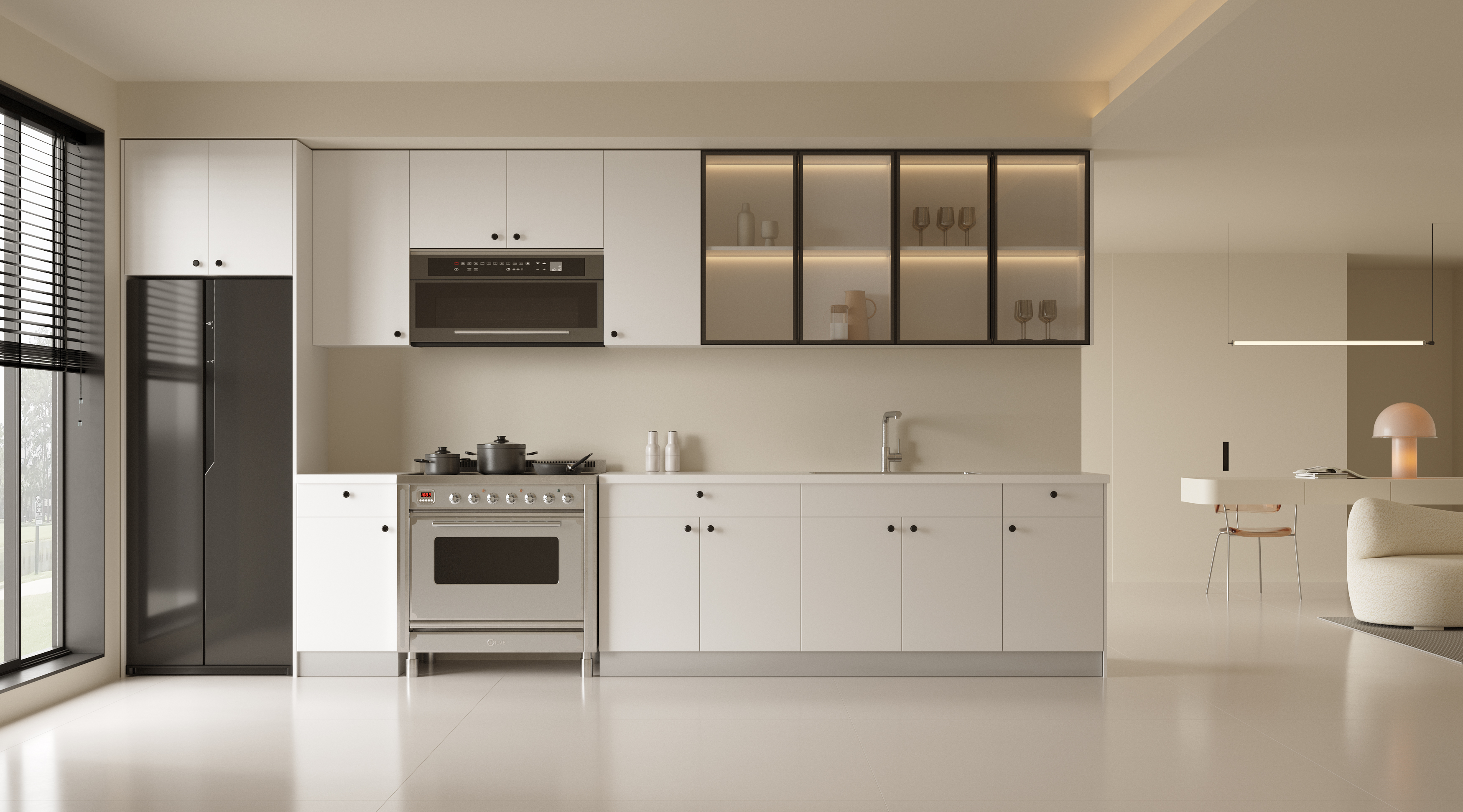
Two parallel runs of cupboards with a corridor between them. The most space-efficient layout for cooking; the most claustrophobic without careful planning. Modern kitchen cupboards here benefit from a mix of upper and lower units with at least one open section to prevent tunnel effect. The end walls are prime real estate for tall pantry columns.
L-Shaped
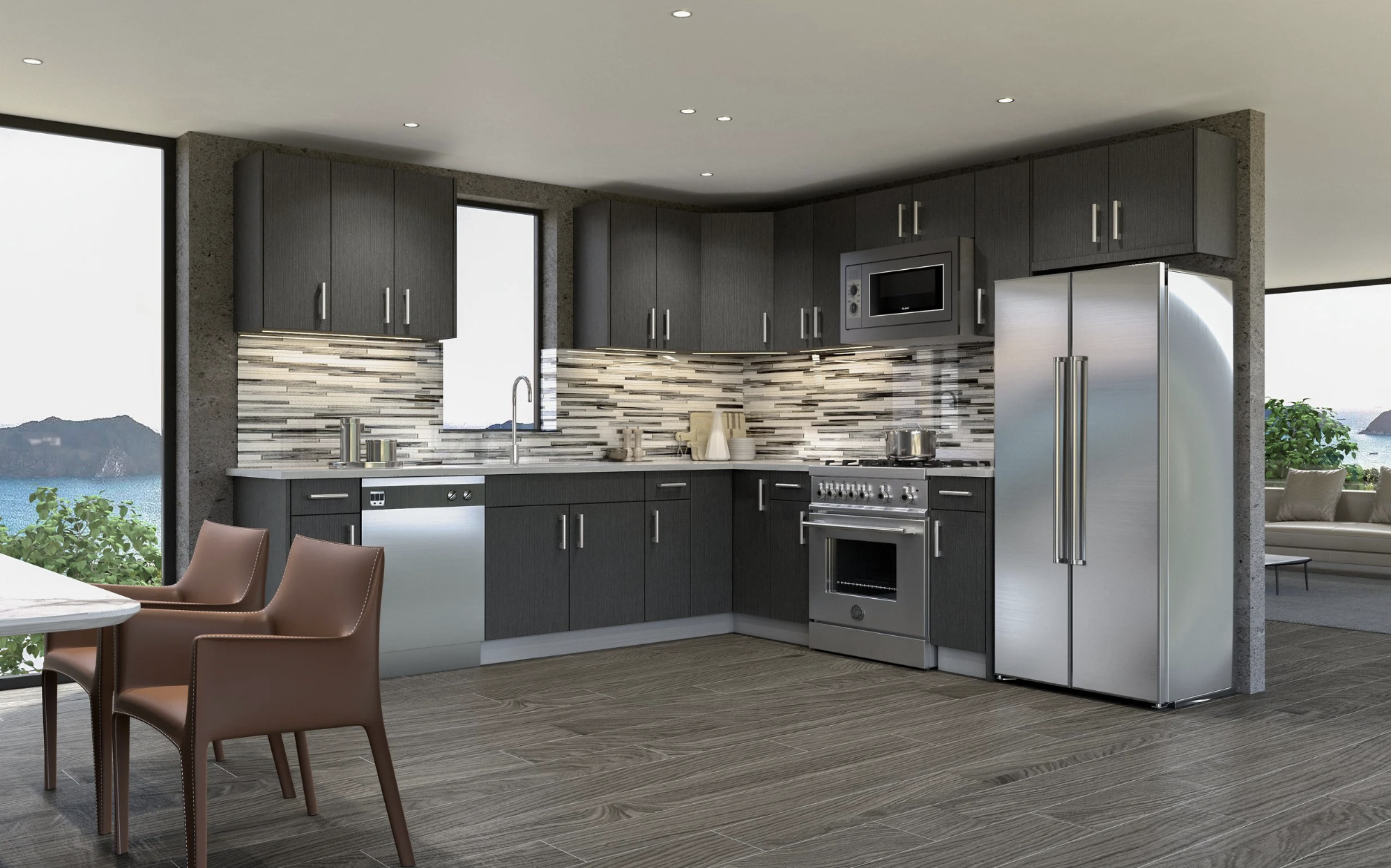
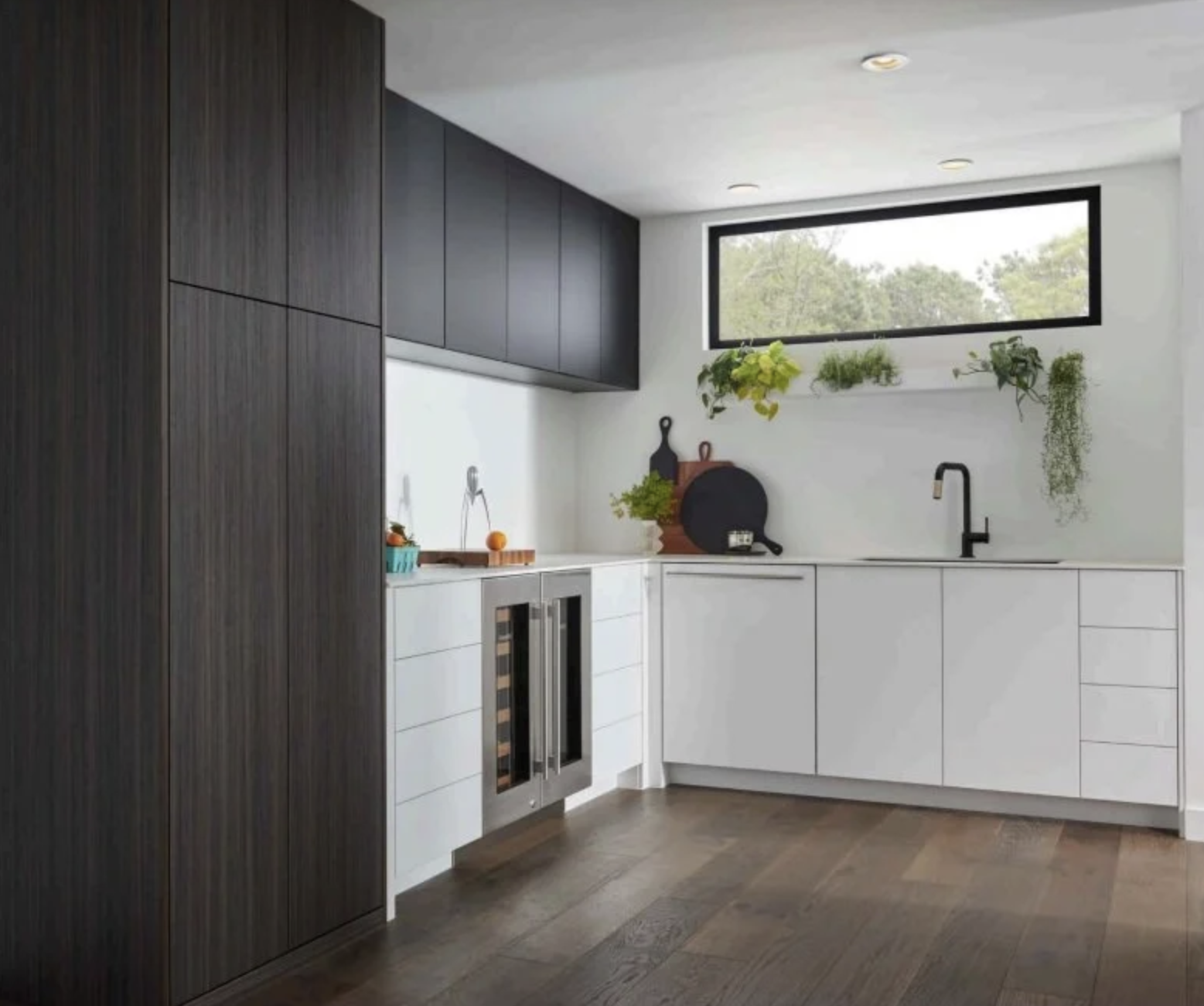
Two runs meeting at a corner. The corner is the layout's critical point — dead corner cupboard space is one of the most common functional failures in kitchen design. Modern corner solutions: pull-out carousel units, Le Mans mechanisms, or an open corner shelf that converts dead space into a display moment.
U-Shaped
Three runs of cupboards surrounding the cook on three sides. Maximises storage and workflow efficiency; requires at least 2.4m between opposing runs to function without feeling confined. The opposite wall to the cooking zone is the natural location for a full-height modern kitchen cupboard run.
Island / Open-Plan
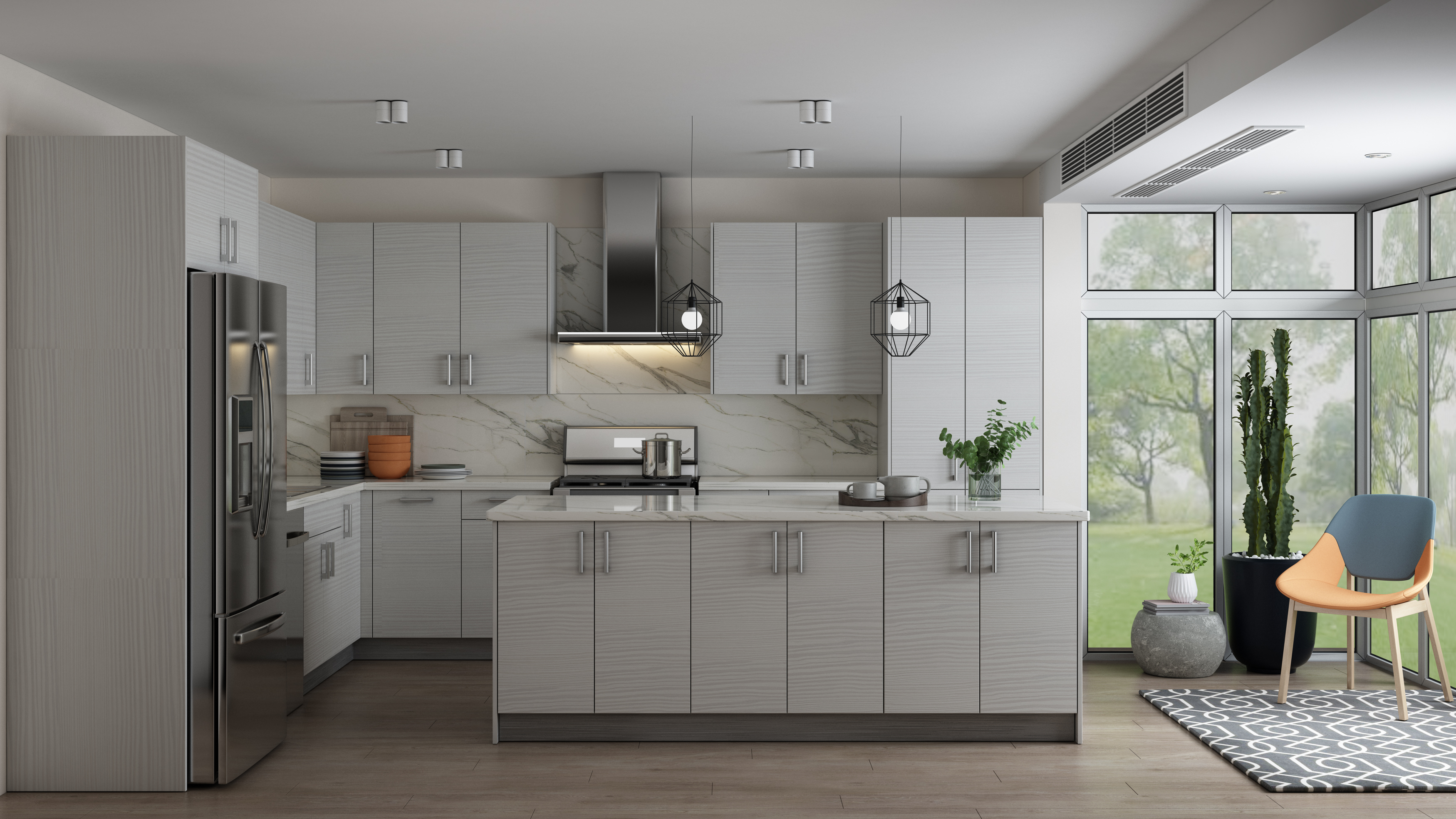
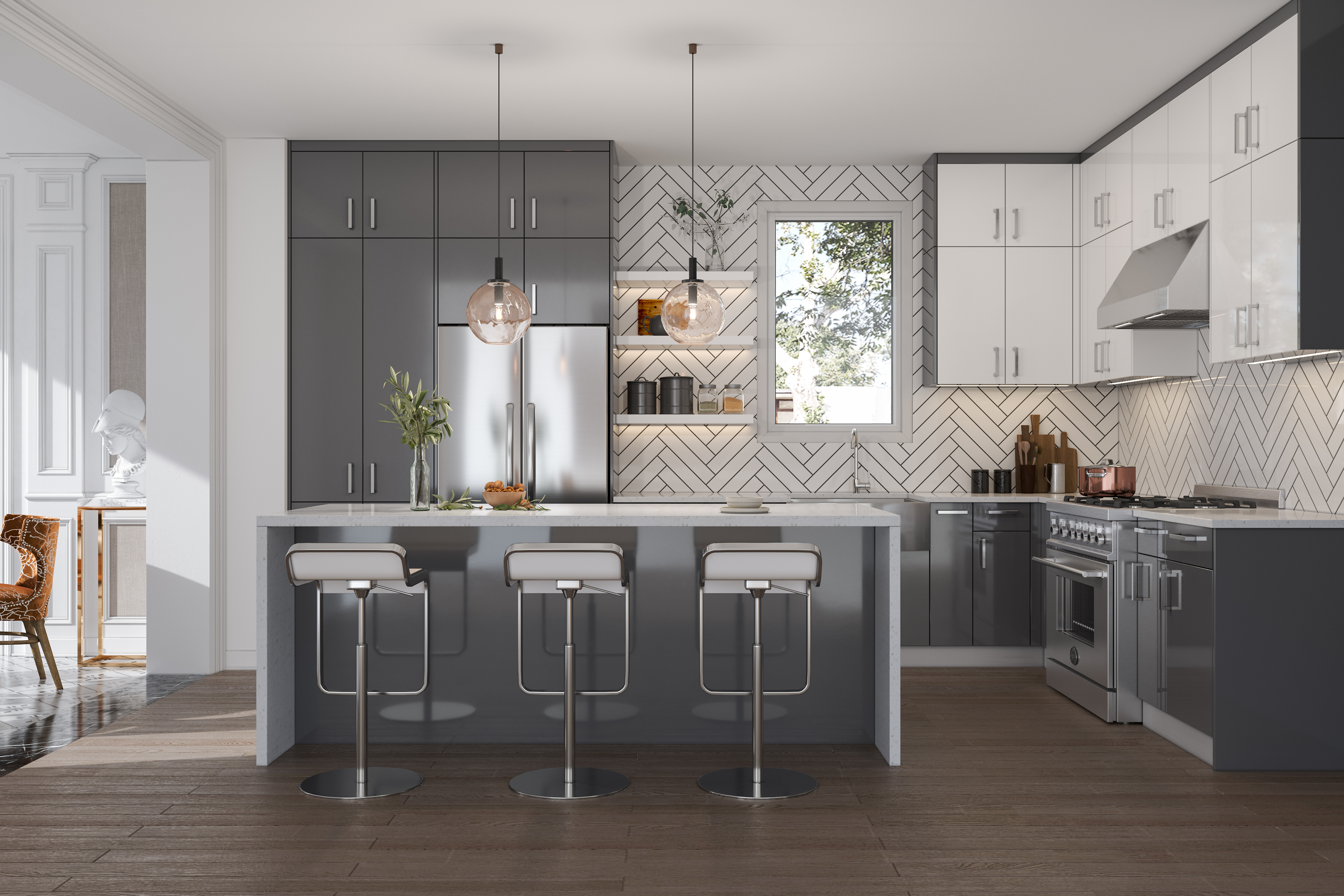
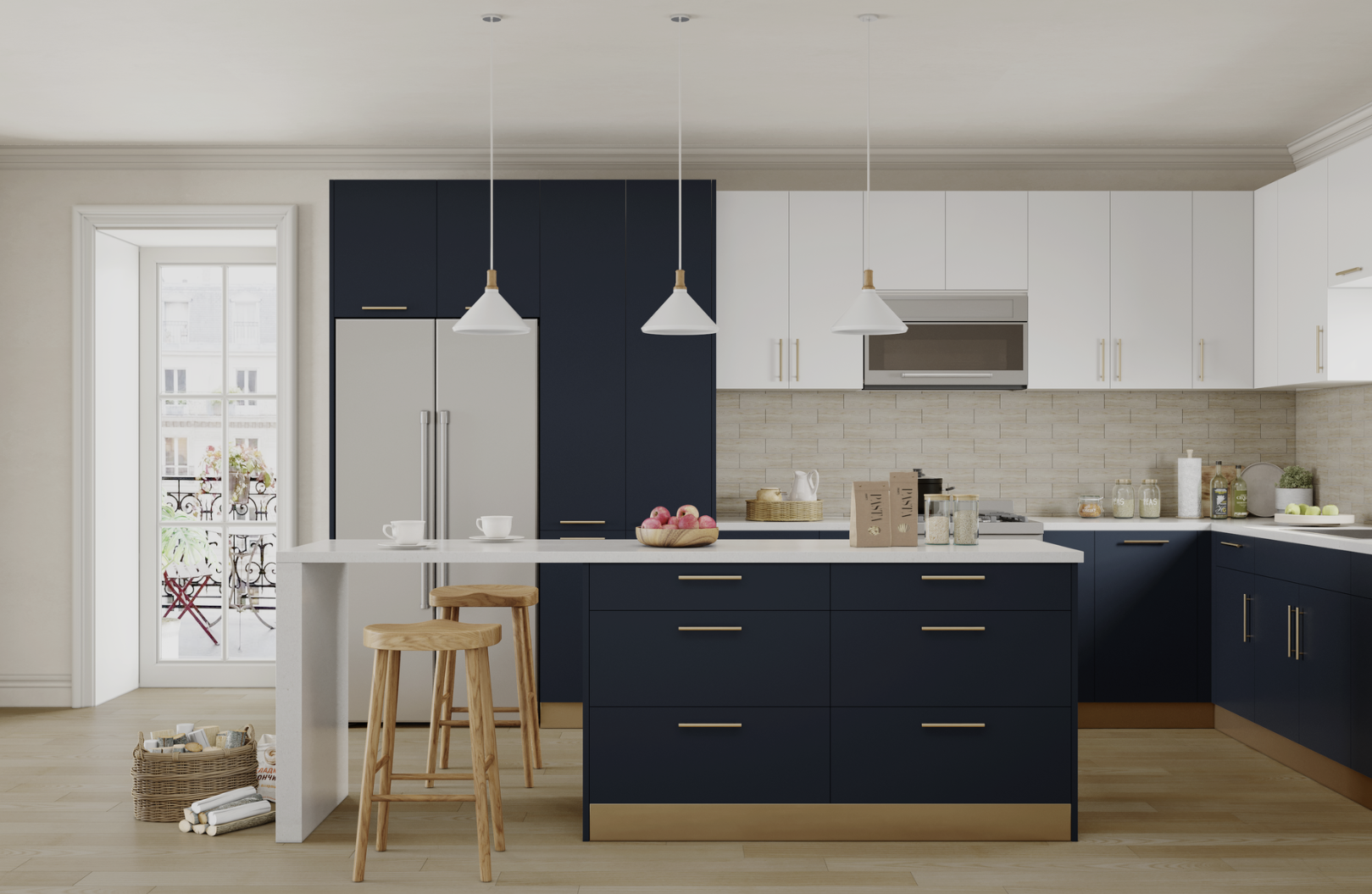
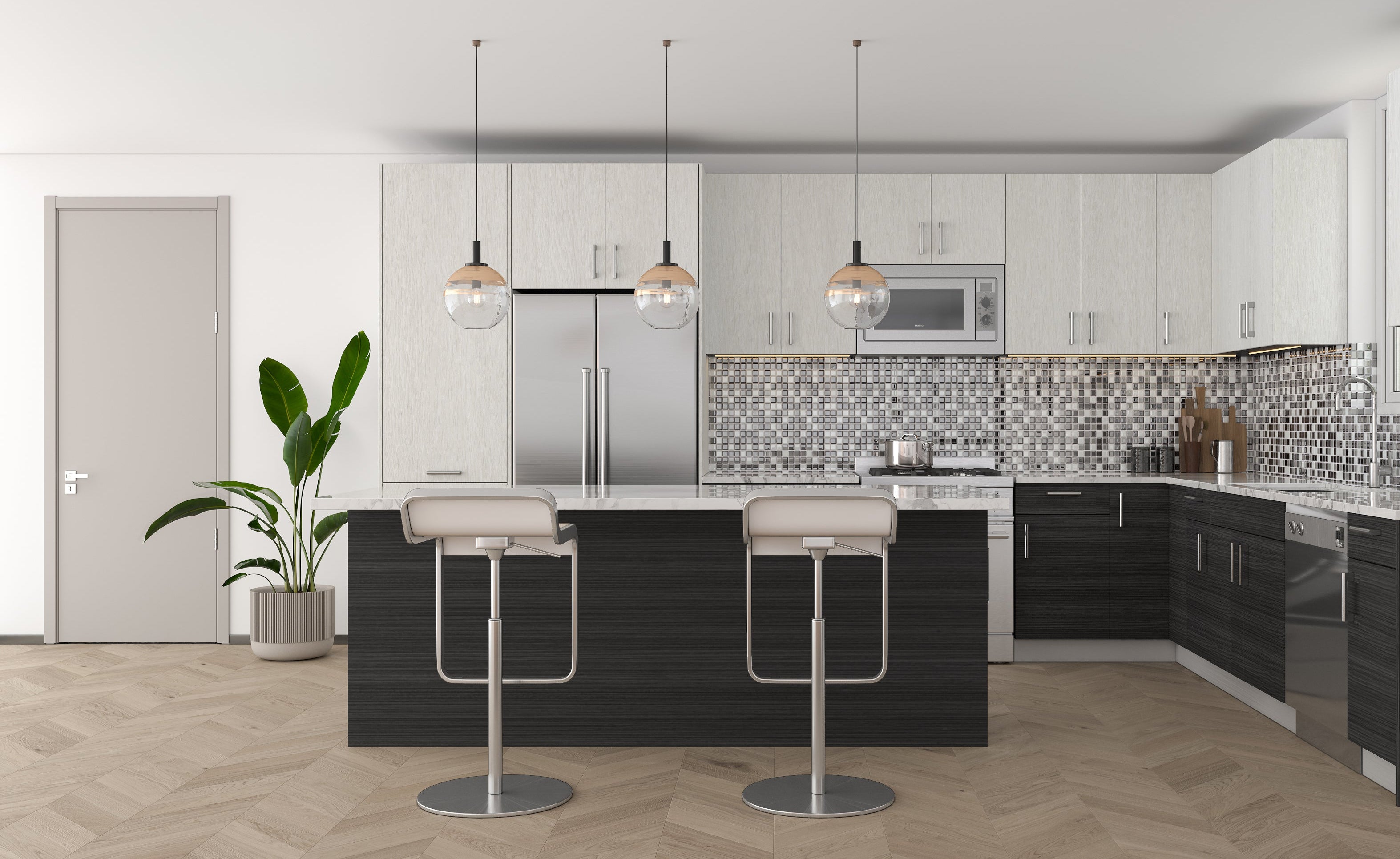
One or two perimeter runs supplemented by a freestanding island. The island itself becomes a cupboard opportunity — drawers and doors on both sides, with consideration for which faces are visible from living areas and should be finished accordingly.
Upper Cupboards: Keep, Reduce, or Remove?
One of the most consequential decisions in modern kitchen cupboard planning is what to do with the wall above the counter. Three positions exist in current practice — and all three are defensible depending on the kitchen's specific context.
The Case for Keeping Upper Cupboards
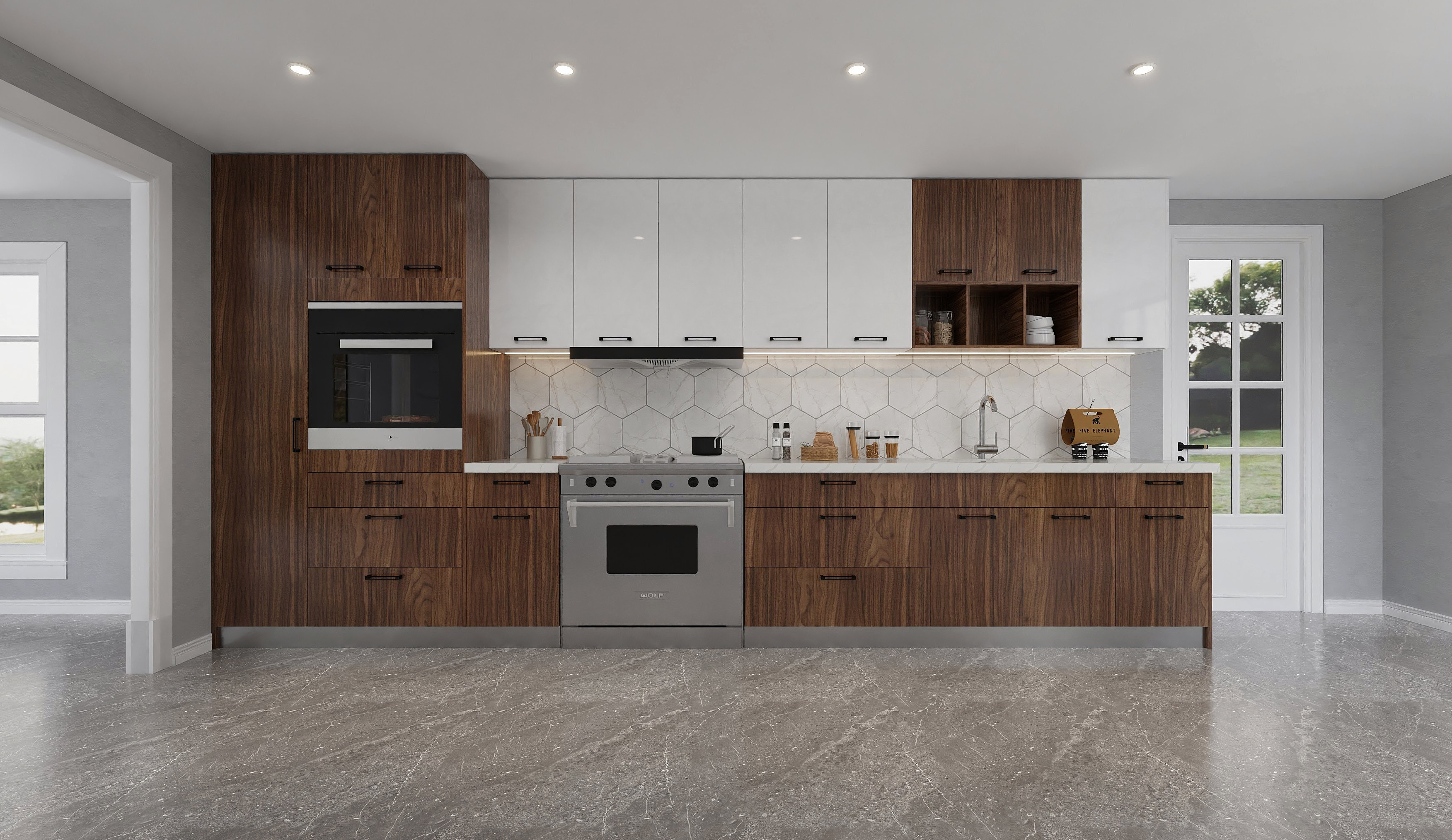
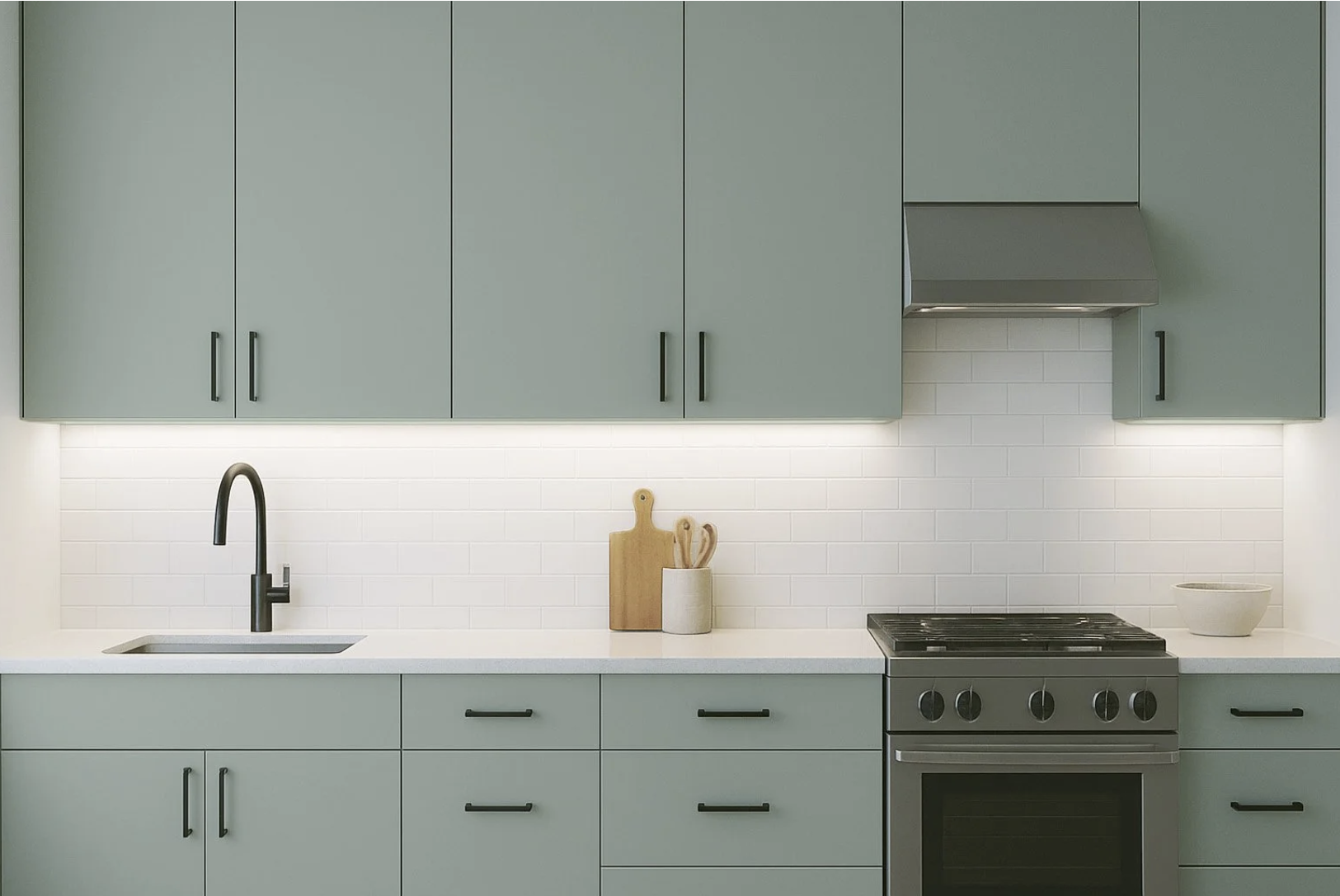
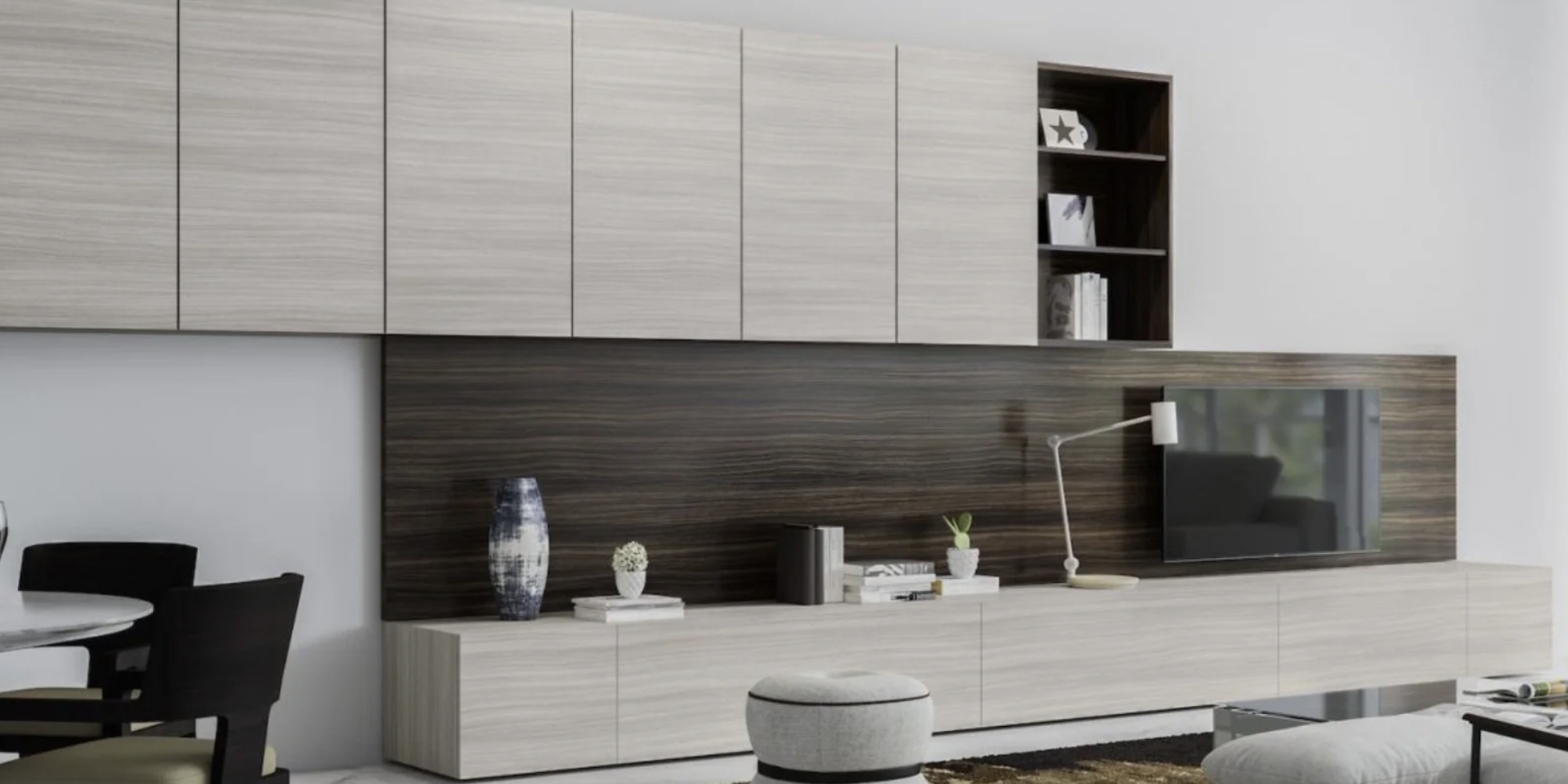
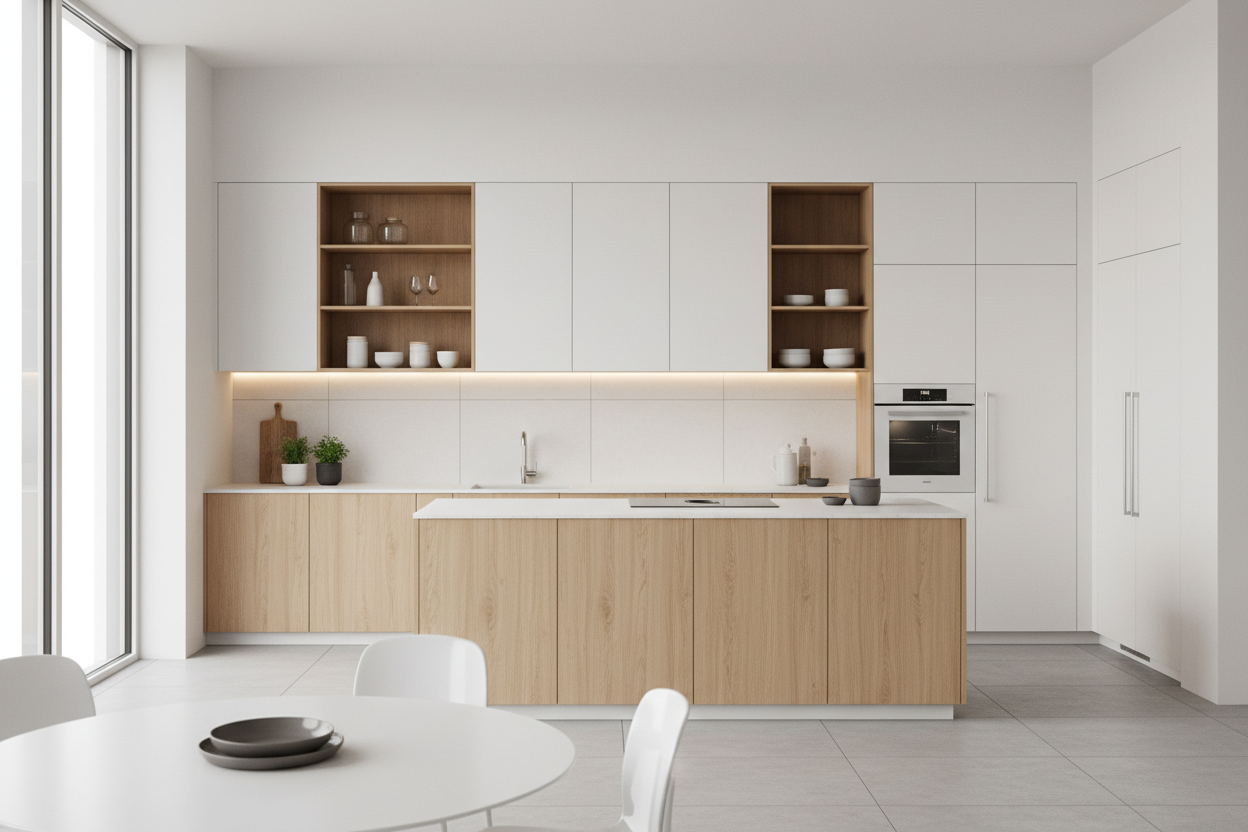
In smaller kitchens, upper cupboards provide storage volume that cannot easily be replaced elsewhere. A full run of floor-to-ceiling modern kitchen cupboards on one wall is almost always more storage-efficient than eliminating uppers in favour of open shelving. The visual weight of upper cupboards can be reduced through glass fronts, lighter finishes than the lower run, or by leaving a deliberate gap between the counter and the start of upper units.
The Case for Reducing Upper Cupboards
In open-plan kitchens where the cabinetry is visible from living spaces, a heavy run of upper cupboards can make the kitchen feel more like a utility room and less like a room. Reducing upper cupboard presence — or eliminating it on one wall while concentrating storage into a full-height column elsewhere — gives the kitchen a more architectural quality that reads better from a distance.
The Case for Open Shelving (With Honest Caveats)
Open shelving where upper cupboards previously sat creates lightness and display opportunity. The honest caveat: open shelves in a kitchen accumulate grease particles and dust at a rate that closed cupboard fronts do not. The kitchens where open shelving works long-term are those used by people who genuinely maintain them — which is fewer households than the design magazines suggest.
The Island as a Cupboard Opportunity
Islands are often treated primarily as counter space — which misses their significant storage potential. A well-specified kitchen island incorporates modern kitchen cupboards on both sides: deep drawer stacks on the cook's side for utensils and cookware, door-fronted lower storage on the dining side for less-accessed items, and consideration for appliance housing (wine fridge, microwave drawer) at appropriate heights.
Island Clearance: The Numbers That Matter
- 900mm minimum between island and perimeter cupboards for single-person kitchen use
- 1050mm recommended for two people cooking simultaneously
- 1200mm if the island has appliances (dishwasher, oven) whose doors open into the aisle
Zoning Modern Kitchen Cupboards by Use Frequency
A layout plan that treats all cupboard space as equivalent storage will produce a kitchen where half the storage is functionally inaccessible — too high, too low, too deep, or too inconveniently located relative to where items are used.
A more intelligent approach zones the kitchen's modern cupboard storage by use frequency and logical proximity:
- Counter-height zone (85–150cm): Items used daily — coffee, oils, spices, frequently accessed cookware. This is the cupboard space with the highest functional value per cubic centimetre.
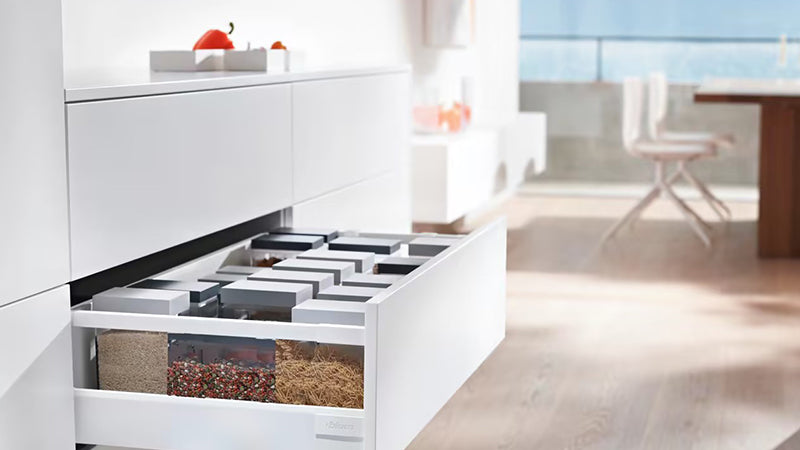
- Lower zone (below 85cm): Pull-out drawers for pots and pans, root vegetable storage, recycling. Avoid fixed shelves below counter height — they create inaccessible corners.
- Upper zone (above 170cm): Seasonal items, bulk storage, rarely used equipment. If the ceiling height allows full-height cupboards, this space can hold months of dry goods without ever requiring daily access.
- Proximity logic: Items used at the hob should be stored in cupboards adjacent to the hob. Items used at the counter go in counter-adjacent cupboards. This sounds obvious and is routinely ignored in layout planning.
Planning for the Kitchen You'll Have in Ten Years
Modern kitchen cupboard layouts should account for how a household's needs will change — not just how they are today. A kitchen specified for a couple in their thirties may be used by the same household with children, aging parents, or changed cooking habits within the design life of the cabinetry.
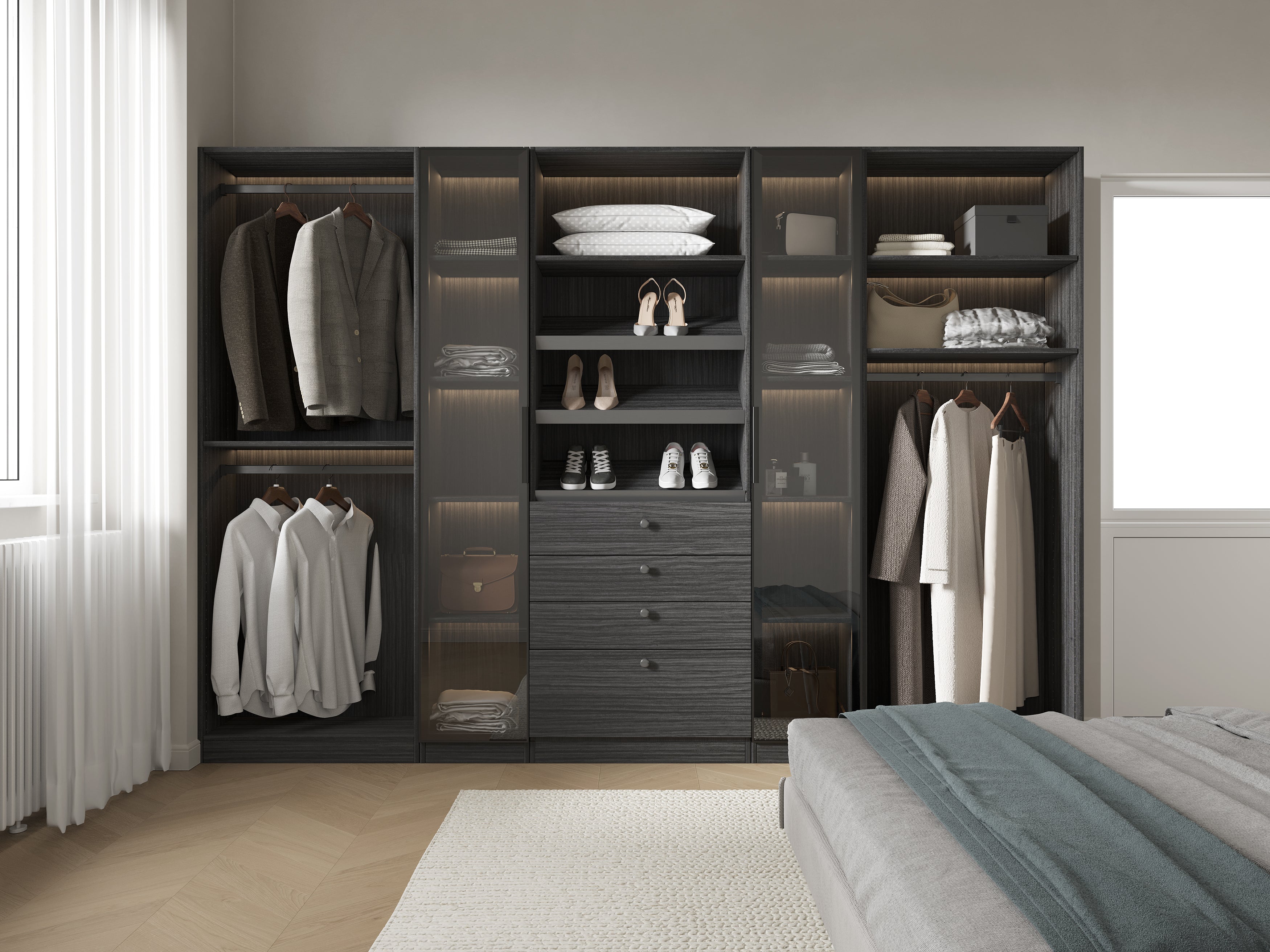
The practical response: specify adjustable shelving systems in all cupboard units rather than fixed shelves; build in electrical points for zones where appliance use might evolve; and leave at least one section of the layout — typically a tall cupboard column — as flexible, unassigned storage that can be reconfigured as needs change.
Manufacturers whose kitchen cupboard systems are designed around genuine modularity — where internal configurations can be changed without rebuilding the unit — offer meaningfully more long-term value than those selling fixed, non-reconfigurable solutions. It's a question worth asking directly before committing to any specification.

The Layout Mistakes Worth Knowing in Advance
- Specifying deep upper cupboards — standard 300mm depth for uppers is often right; 400mm uppers store more but require conscious reaching to access the back, which most people stop doing within months
- Placing the bin cupboard far from the prep area — a bin integrated into the prep zone saves the most steps in a kitchen's daily life
- Ignoring the 600mm landing zone rule — every major appliance (oven, refrigerator, dishwasher) needs at least 600mm of adjacent counter space for safe and functional use
- Under-specifying the sink run — the counter and cupboard space either side of the sink receives more daily use than any other section of the kitchen; it should be your most carefully planned zone, not an afterthought
- Over-indexing on symmetry — visually symmetrical modern kitchen cupboard layouts can be functionally inferior to asymmetric layouts that follow the kitchen's actual workflow logic
The best kitchen cupboard layout is the one that disappears — where storage is always in the right place, access is always convenient, and the layout never creates friction between where things are kept and where they're used. That outcome requires planning that starts with honest behaviour analysis, not showroom aesthetics.