There's a gap between what appears on design feeds and what genuinely represents a shift in how modern kitchen cupboards are being designed, specified, and lived with. The former cycles fast; the latter moves slowly and deliberately. What's happening in 2025 sits firmly in the second category — and it points toward kitchens that are more material-rich, more personally expressive, and considerably less uniform than the decade that preceded them.
Here's an honest read of the directions that are reshaping modern cabinetry — and why they're sticking.

The End of the All-White Kitchen (And What Replaced It)
The all-white kitchen had a remarkable run. For the better part of fifteen years, it was the safe answer to virtually every cabinetry brief — clean, photographable, broadly appealing. Its retreat isn't dramatic, but it's now unmistakable. Modern kitchen cupboards are absorbing colour and material depth in ways that would have felt risky in a specification ten years ago.
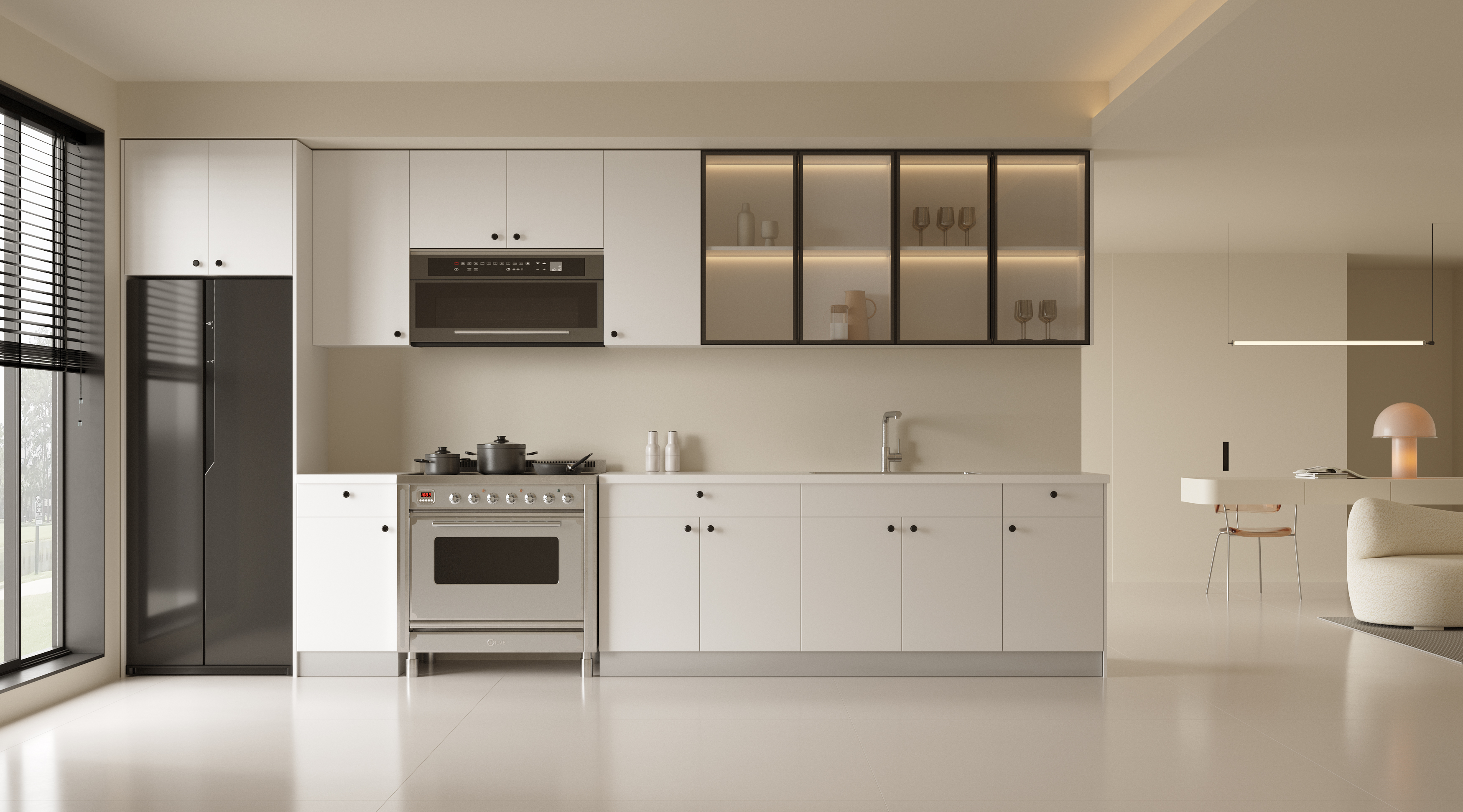
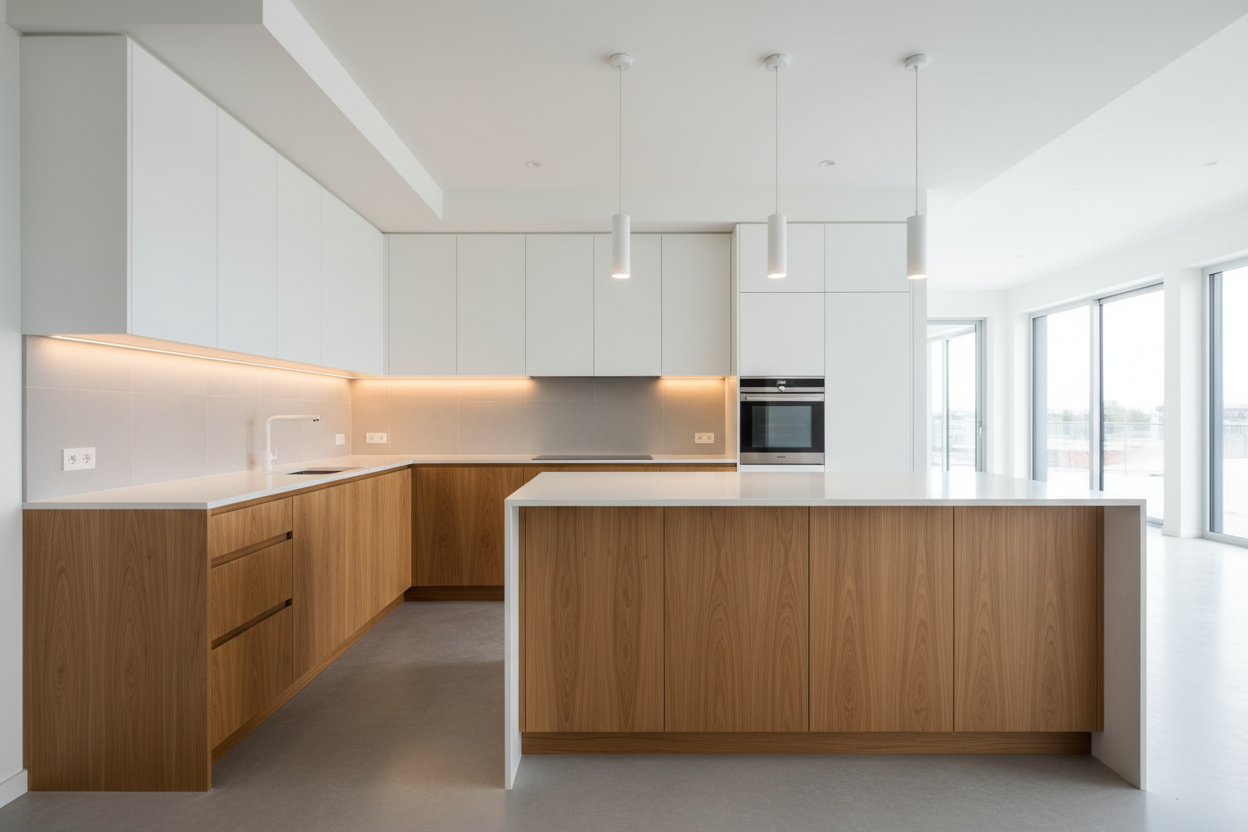
What's replaced white as the dominant neutral isn't a single colour — it's a philosophy. The new baseline for modern kitchen cupboards is warmth: warm whites edging toward putty and linen, warm greys shifting toward greige and clay, warm woods in oak, teak, and cerused finishes. Cold, blue-toned whites are the ones disappearing from specification sheets.
The Colours Making the Clearest Statement
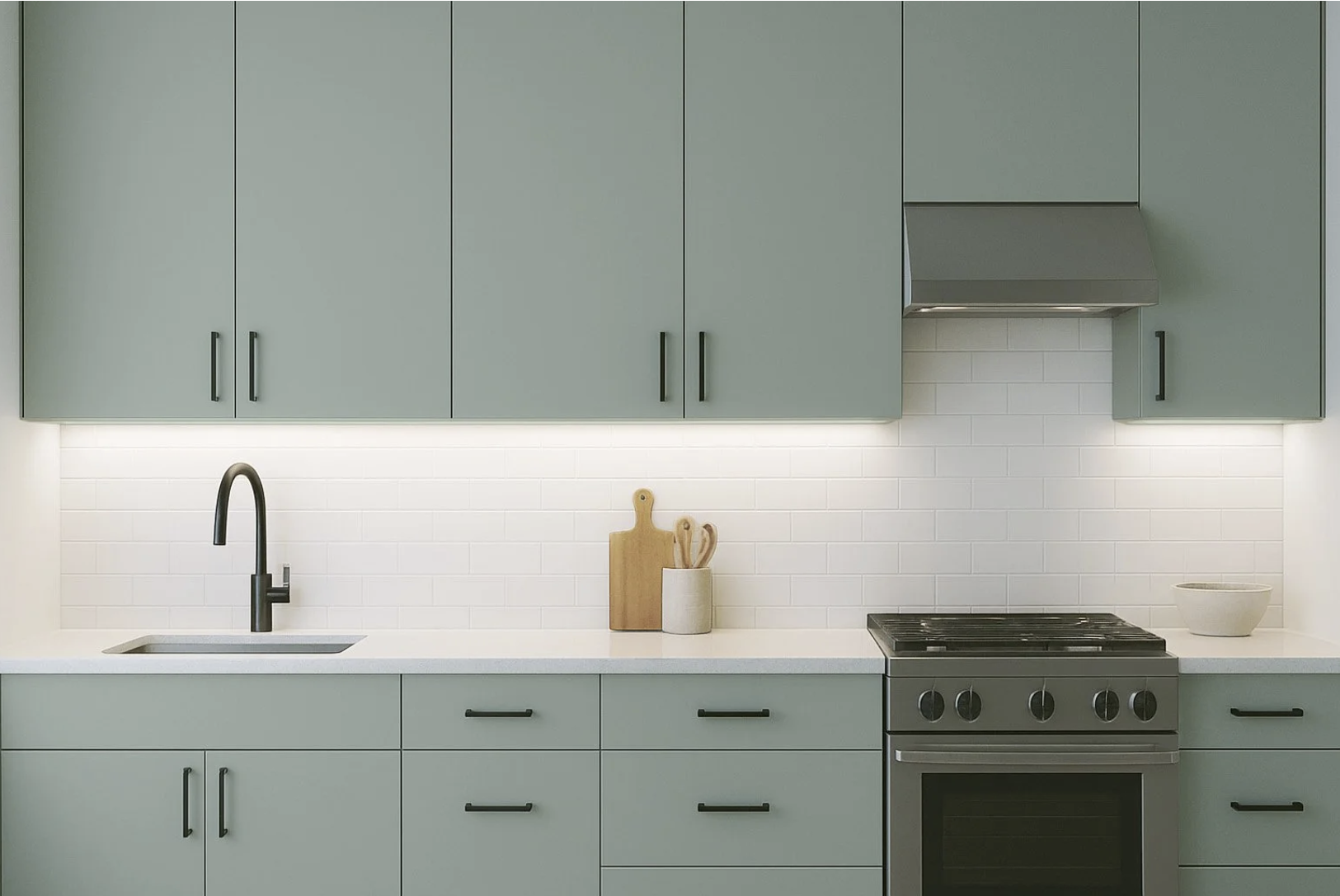
- Deep forest greens — specifically sage-adjacent olive greens and hunter greens — have moved from boutique to mainstream and show no sign of fatigue; they work across matte lacquer, painted wood, and veneer substrates
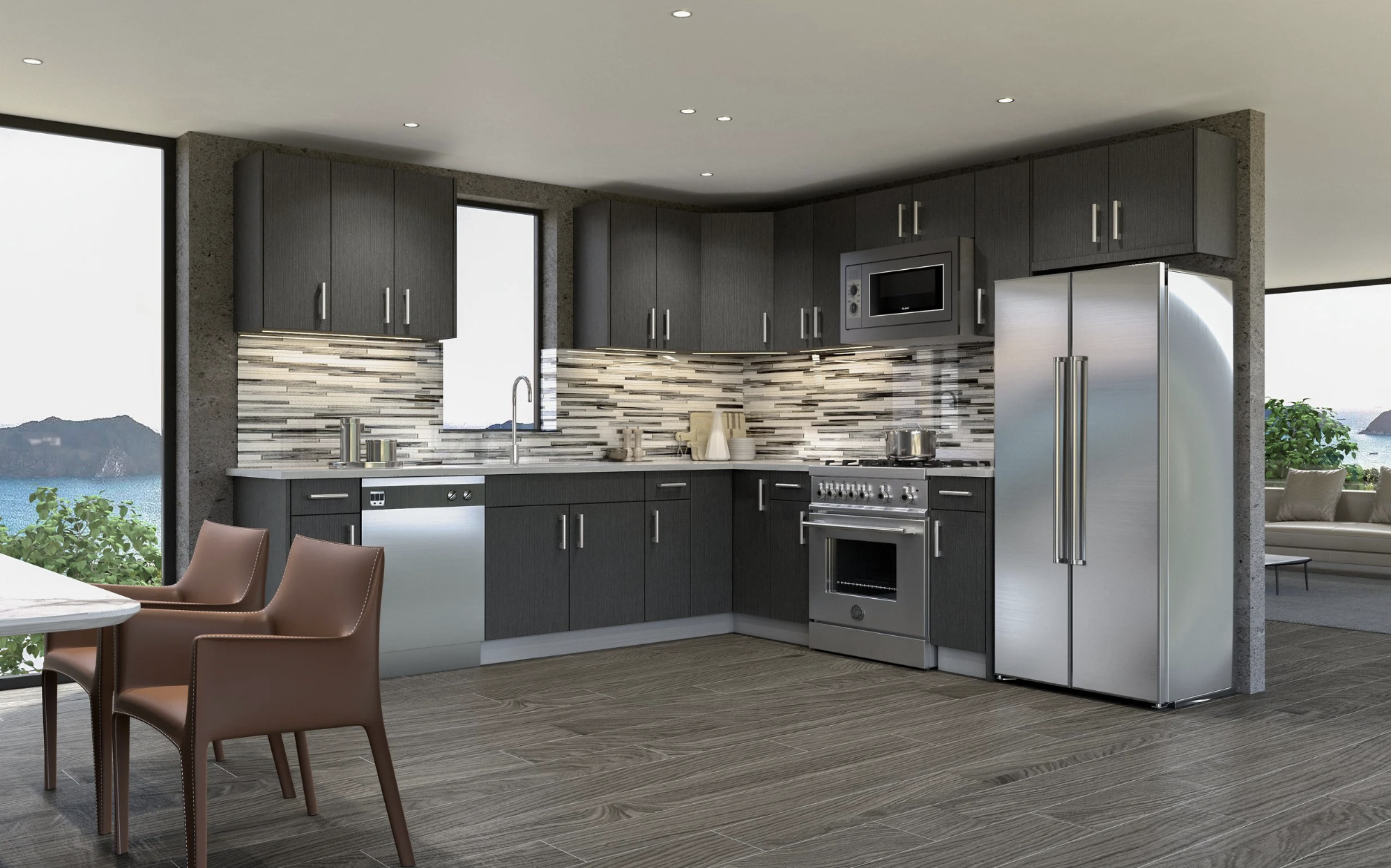
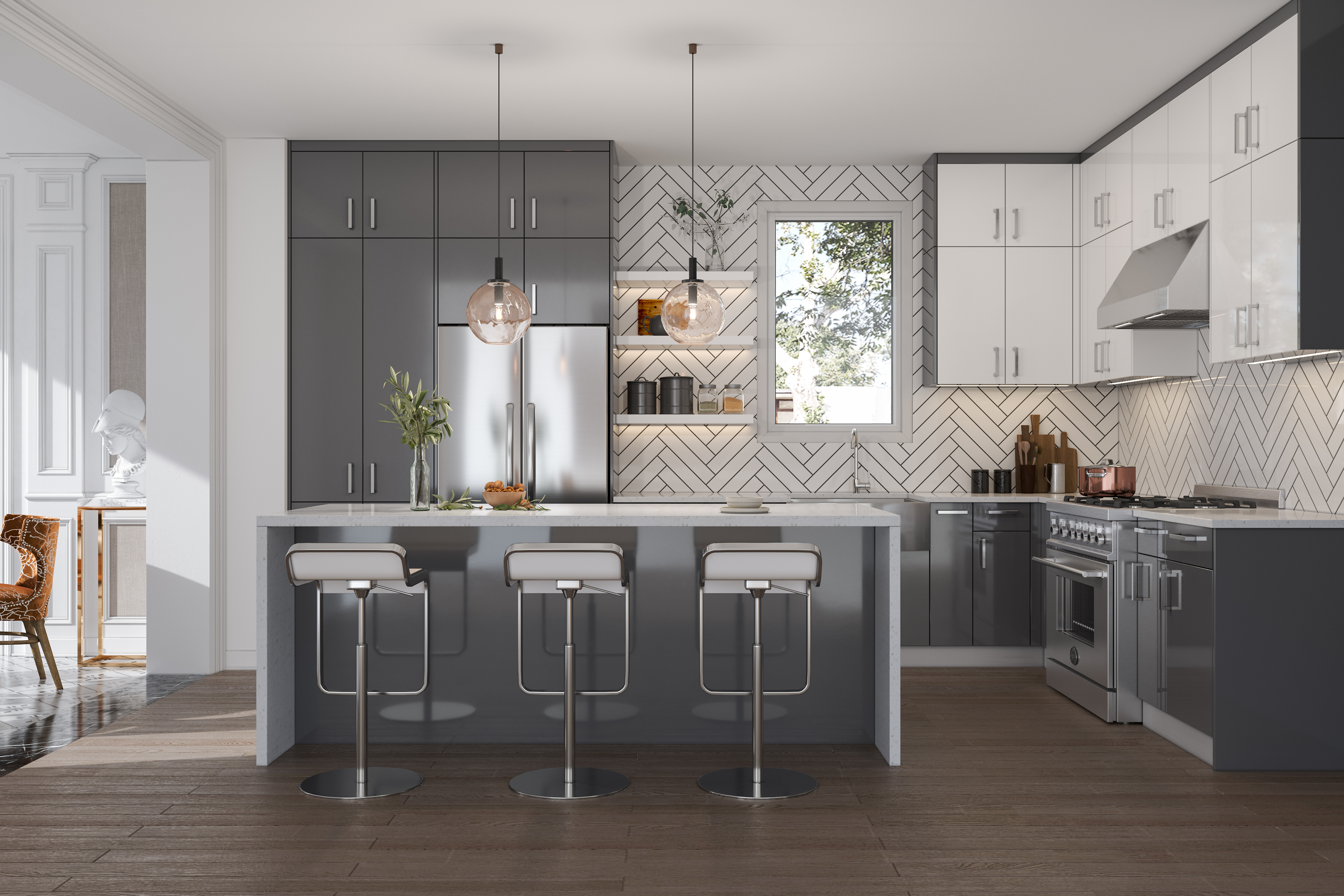
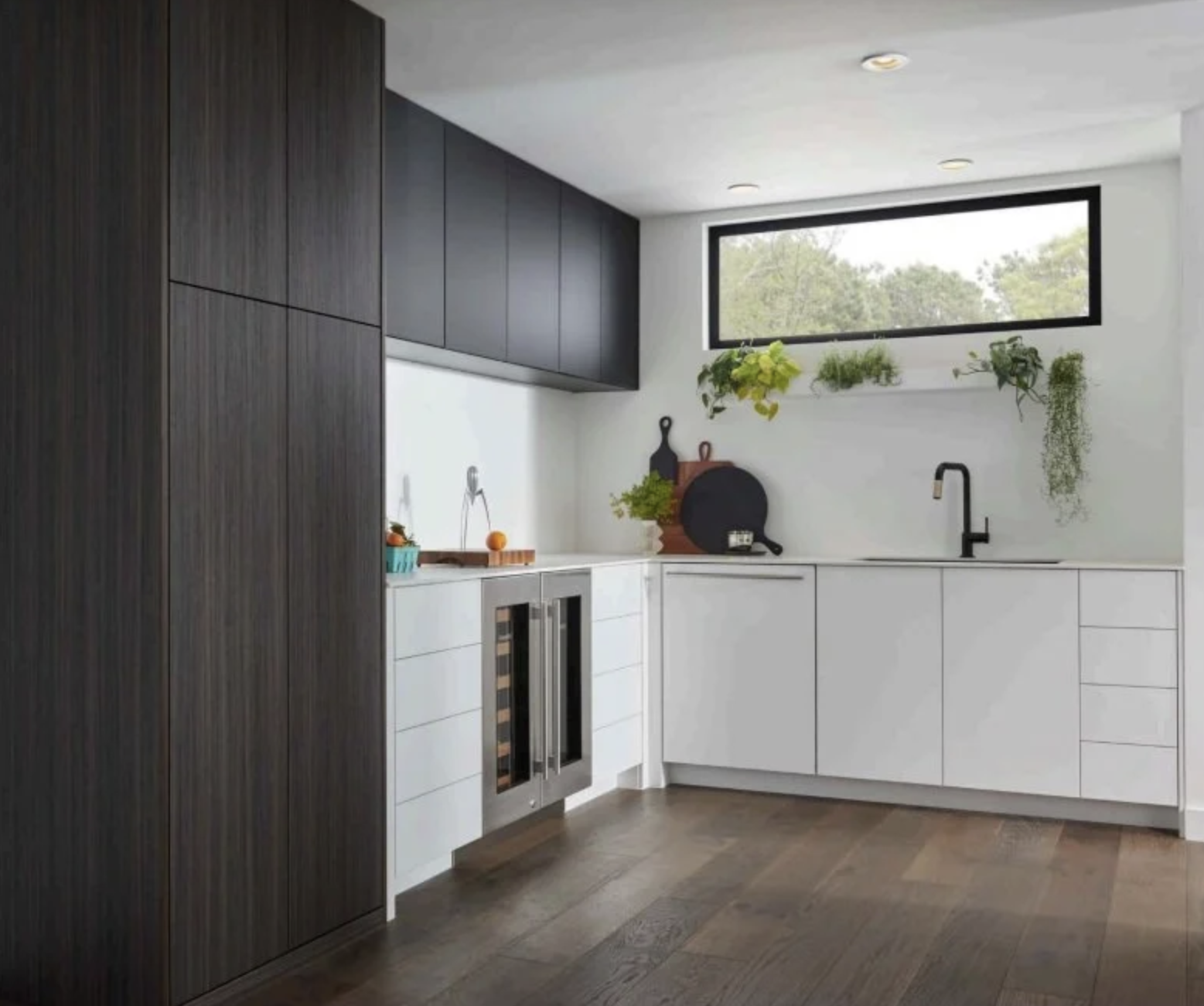
- Warm charcoals and near-blacks — used as lower cupboard runs contrasting with lighter upper cabinetry, or as the sole cupboard colour in high-contrast kitchens with light stone counters
- Dusty blues and slate tones — less assertive than green, they bring a painterly quality to modern kitchen cupboard schemes without the visual weight of darker colours
- Terracotta and warm umbers — still emerging but gaining traction in kitchen cupboard design informed by Mediterranean and Southern European interiors
Two-Tone: The Layout Decision Masquerading as a Colour Choice
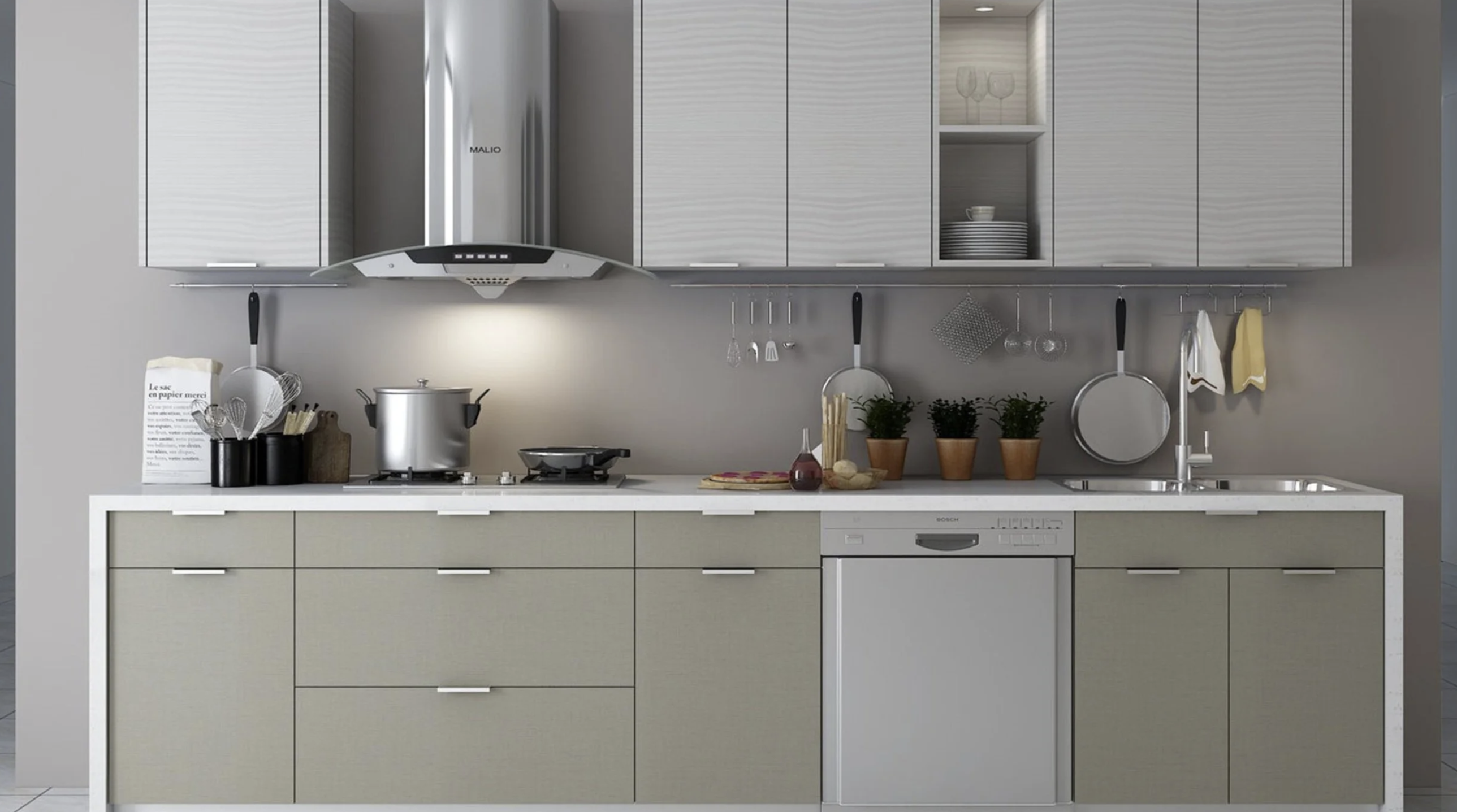
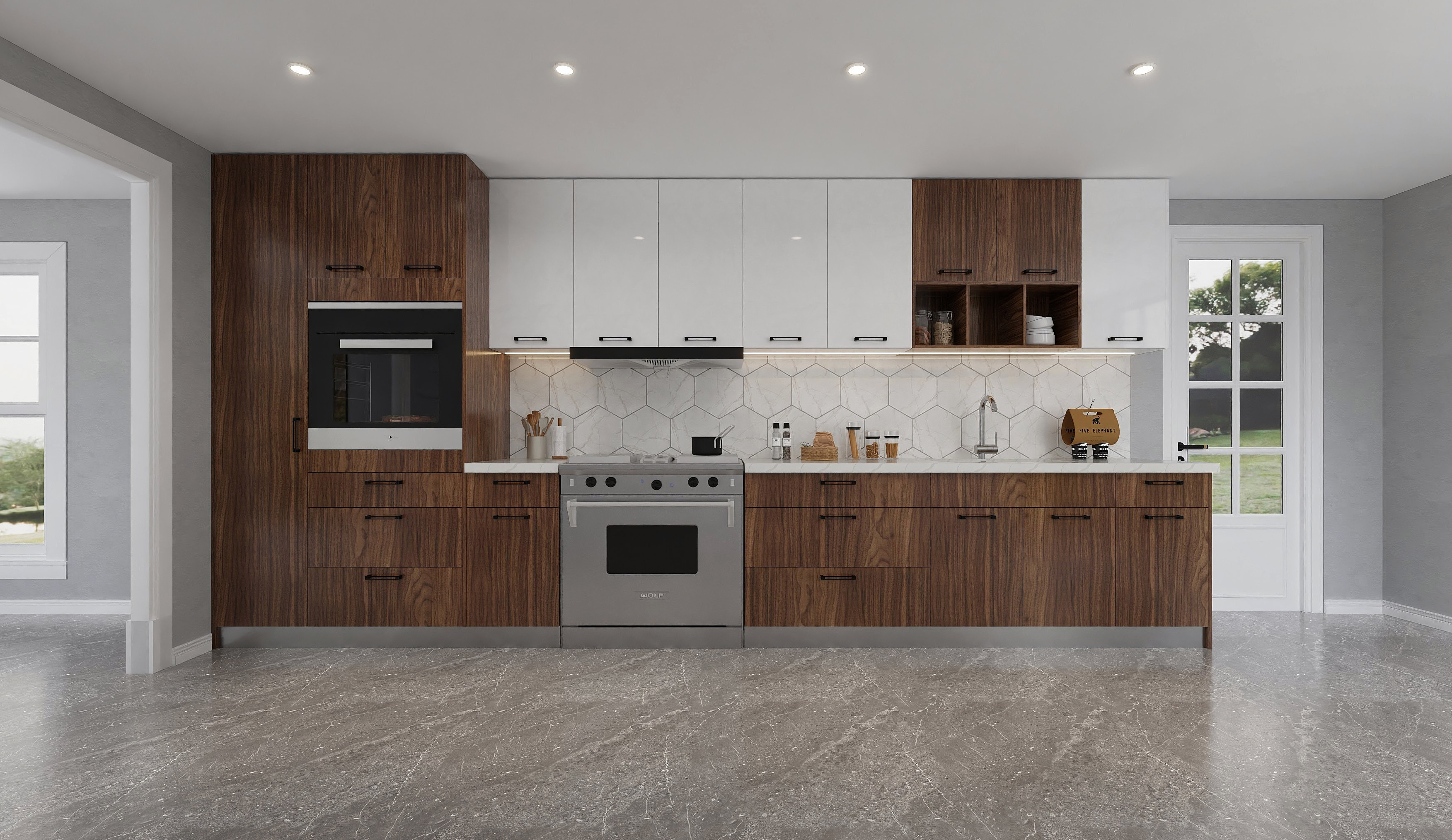
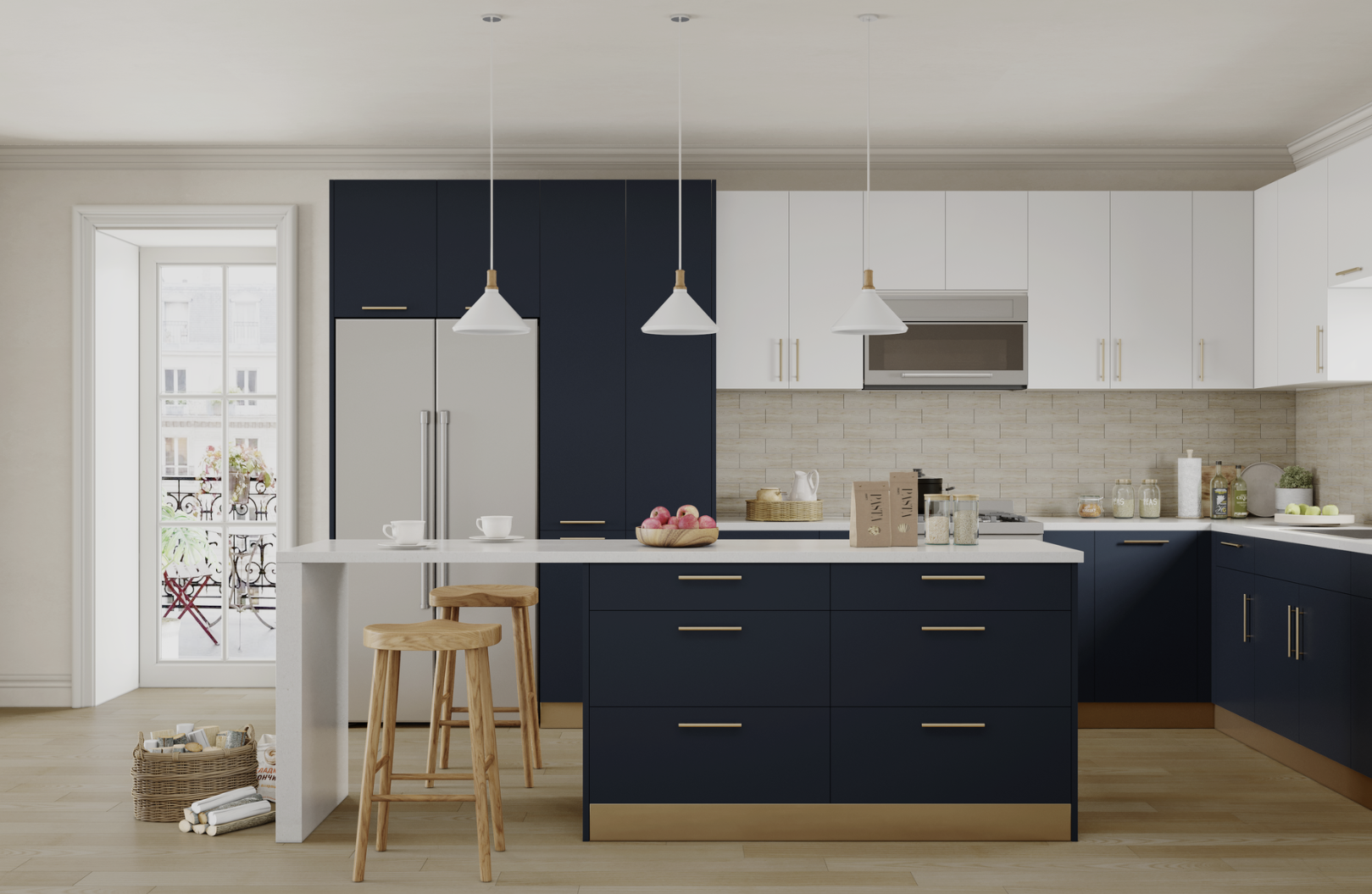
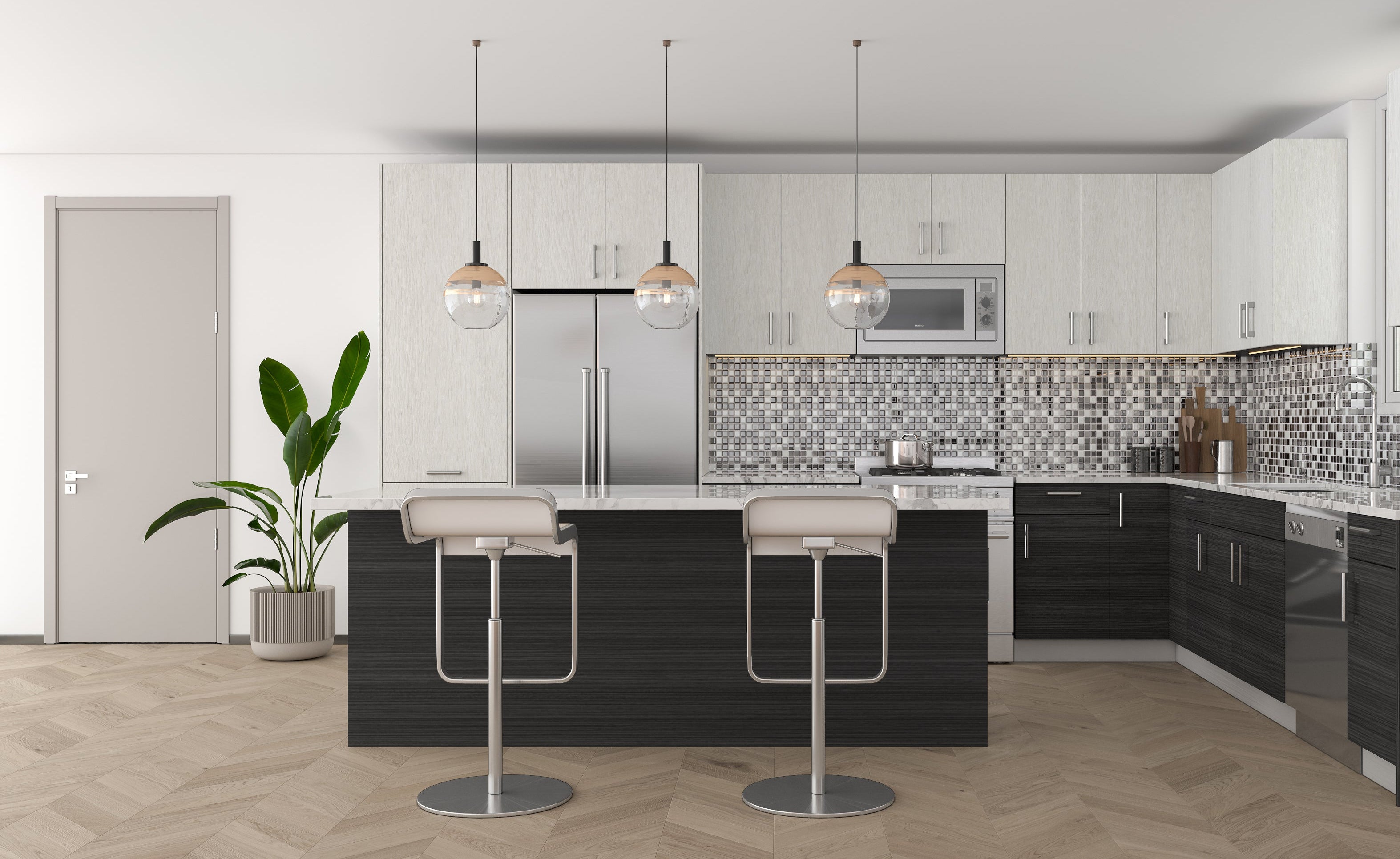
Two-tone kitchen cupboard schemes — where lower cabinets and upper cabinets (or an island) are finished in different colours — have become the standard rather than the exception in contemporary kitchen design. But they're better understood as a spatial decision than a decorative one.
A darker lower run grounds the kitchen and draws the eye downward, making high ceilings feel more intimate. A lighter upper section opens the room visually. An island in a contrasting tone acts as a piece of furniture rather than a built-in fixture, giving the kitchen a layered, collected quality that a single-colour scheme rarely achieves.
The practical implication: choosing two-tone modern kitchen cupboards requires resolving the colour relationship before selecting either colour individually. The tones need to read as intentional rather than mismatched — which typically means tones within the same temperature family (both warm, or both cool) at different values.
Handleless: Mature, Refined, and Still Dominant
Handleless kitchen cupboards have been the defining aesthetic of modern cabinetry for the better part of a decade. In 2025, they've moved from statement to standard — which means the conversation has shifted from whether to specify them to how to specify them well.
The three primary handleless approaches each produce a different result:
- Integrated J-pull or C-profile channels routed into the door edge — the most common approach, clean and functional, with the channel colour either matching or contrasting the door face
- Push-to-open mechanisms — the most minimal option, no physical relief in the door face; requires precise installation tolerance to work reliably long-term
- Recessed grip rails running the full width of the door — less common but increasingly specified for tall wardrobe sections where a pull at one height serves the full column
The shift worth noting: designers who specified exclusively handleless kitchens five years ago are now introducing deliberate moments of hardware — a single section of cupboards with a sculptural pull — as a way of avoiding the visual monotony that can come from miles of unbroken door faces.
Texture as the New Neutral
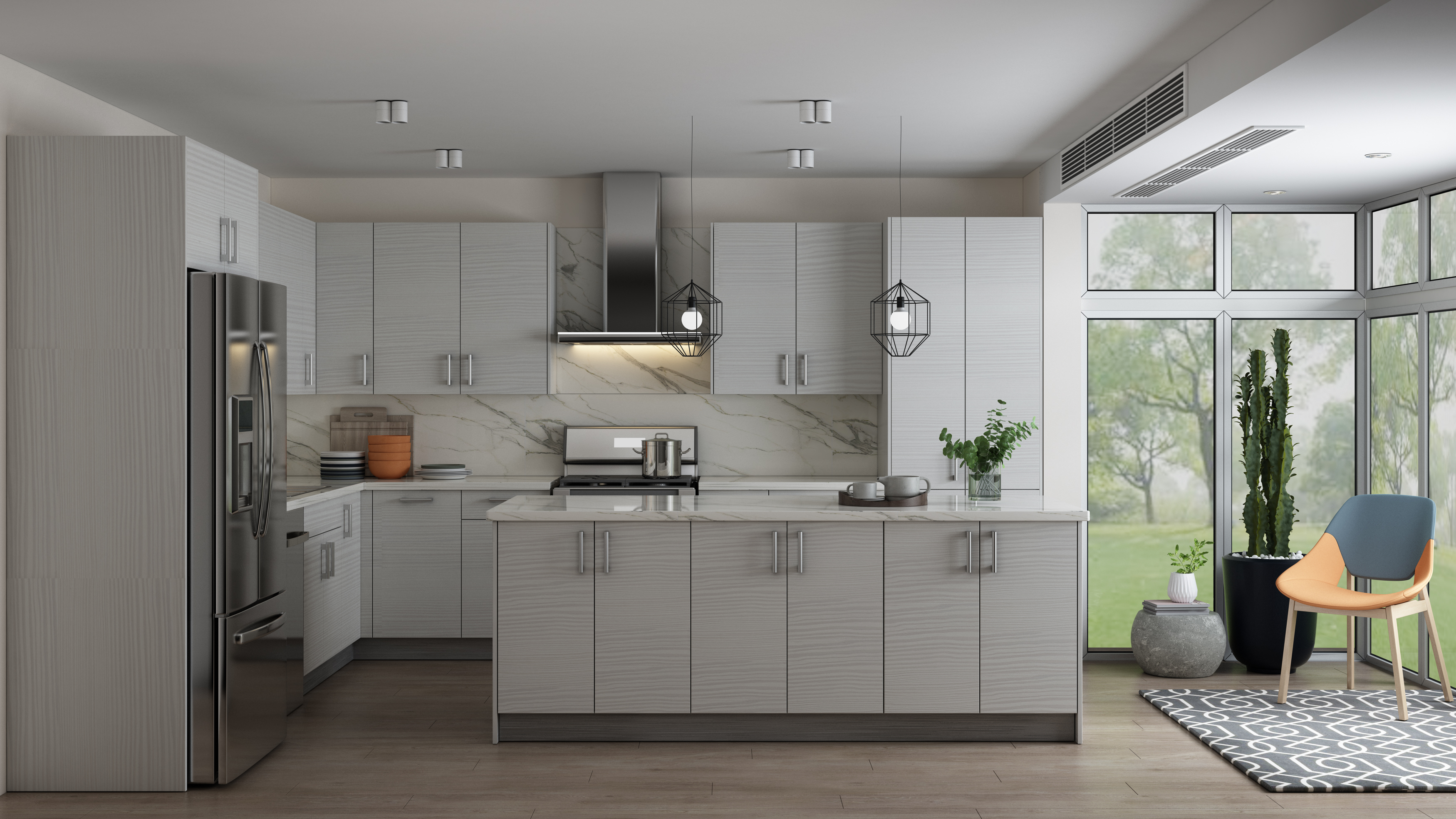
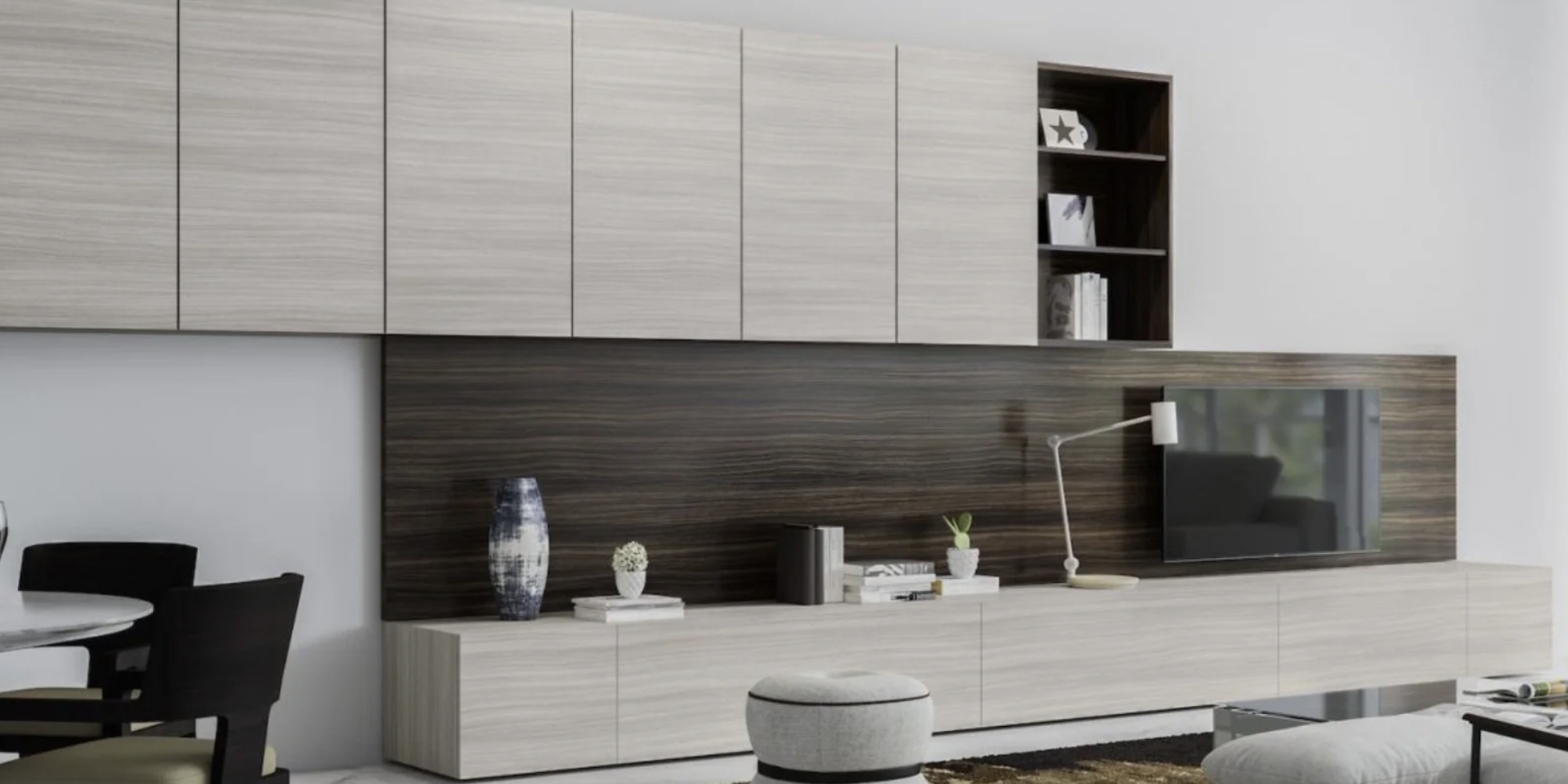
The most significant shift in modern kitchen cupboard design isn't happening at the colour level — it's happening at the surface level. Flat, uniform lacquered panels are being supplemented and in some cases replaced by textured surfaces: fluted fronts, reeded panels, cane inserts, wire-brushed wood veneers, and raised geometric profiles.
Texture changes how a cupboard reads under different lighting conditions, through different times of day, and from different distances. A flat matte panel reads the same at noon and at 7pm under pendant lighting. A fluted oak cupboard front is a different object entirely in each condition — which gives the kitchen a quality of presence that flat finishes simply cannot provide.
The Texture Formats Being Most Widely Specified
- Vertical fluting — columns of raised ridges on the door face; works best on tall pantry columns and island panels rather than across all cupboard fronts
- Reeded timber — rounded parallel ridges, softer than sharp fluting; particularly effective in warm wood tones
- Limewashed or wire-brushed veneer — grain-emphasized wood surface that reads as artisanal without requiring solid timber pricing
- Microcement and concrete-effect laminates — raw, industrial texture applied to cupboard faces in European-influenced schemes
Integration: When Modern Kitchen Cupboards Disappear
The highest expression of modern kitchen cupboard design is the kitchen where the cupboards are almost invisible — where appliances are fully integrated behind matched panel doors, where the refrigerator and dishwasher read as cabinetry, and where the room presents as a resolved architectural space rather than a collection of equipment.
Achieving this requires a level of coordination — between cupboard manufacturer, appliance specification, and installation — that most off-the-shelf cabinetry systems cannot accommodate. It's the domain of custom cabinetry manufacturers who design their panel systems specifically around appliance integration tolerances.
Manufacturers with serious production infrastructure and decades of custom specification experience — Goldenhome among them, with over 27 years of global cabinetry manufacturing — have developed integrated systems that account for ventilation clearances, appliance depth variability, and the precise panel alignment that makes a refrigerator read as a cupboard rather than a refrigerator in a cupboard.

What These Trends Share
Underneath every direction covered here — warm neutrals, two-tone schemes, handleless profiles, textured surfaces, and integrated design — is the same underlying impulse: modern kitchen cupboards in 2025 are being designed to feel less like kitchen equipment and more like considered interior architecture.
That shift reflects how kitchens are being used. They're the most photographed room in the home, the room where people spend significant daily time, and increasingly the room that connects to living and dining in open-plan configurations. A kitchen that looks and feels like a utility space has become a missed opportunity. Modern kitchen cupboards are one of the clearest ways to resolve that.